

A Simple Guide to Business Budgeting
Business budgeting can feel overwhelming no matter where you are on your business journey; whether you’re growing a side hustle, opening a studio, running a service-based business or preparing to hire your first team member. Many business owners feel confident in what they do, but less confident when it comes to understanding the financial side of growth.
The good news is that business budgeting does not need to be complicated. At its core, it is simply about understanding how much money is coming into your business, what is going out, and planning ahead so you can grow sustainably and make decisions with confidence.
This guide breaks down the basics of business budgeting in a clear, practical, non-jargon way helping you feel more in control of your business finances, wherever you are in your journey.
What business budgeting actually is (and what it isn't)
The myth: budgeting is for big companies with finance teams
Budgeting has a PR problem. The word conjures images of large corporations with finance departments and quarterly reporting cycles. It sounds like something you need an MBA to understand.
In reality, a business budget is simply a plan for your money. It is a forward-looking document that sets out what you expect to earn and what you expect to spend over a given period — usually a month or a year. That's it.
The myth: budgeting means restricting yourself
Another common misunderstanding is that a budget is about cutting back and saying no. For small business owners it is actually the opposite. A budget is what gives you permission to say yes — to hiring someone, investing in a new tool, or taking on a bigger project — because you can see the numbers clearly enough to know you can afford it.
The myth: you need an accountant for day to day budgeting
Your accountant is a valuable advisor, and when you know your numbers, you move from simply receiving advice to driving strategic conversations. By managing your day-to-day budgeting and understanding the basics, you empower yourself to ask more informed questions, turning your accountant into a partner for growth.
The key numbers every small business owner should understand
Revenue (Income)
This is all the money your business brings in from selling your product or service, before any costs are deducted. Know this number by week and by month. If you have multiple income streams, like products, services, subscriptions, know how much each one contributes.
For example, your design studio received £3,000 in January from client work. That number is your revenue.
Outgoings (expenses)
Everything you spend to run your business. Split these into two categories:
Fixed costs (i.e. the same every month), such as software subscriptions, insurance and accountancy fees
Variable costs (i.e. things that change month to month), such as materials, freelancers, advertising spend. Knowing which is which matters, because fixed costs are harder to change quickly if money gets tight.
Starling: Spending Insights
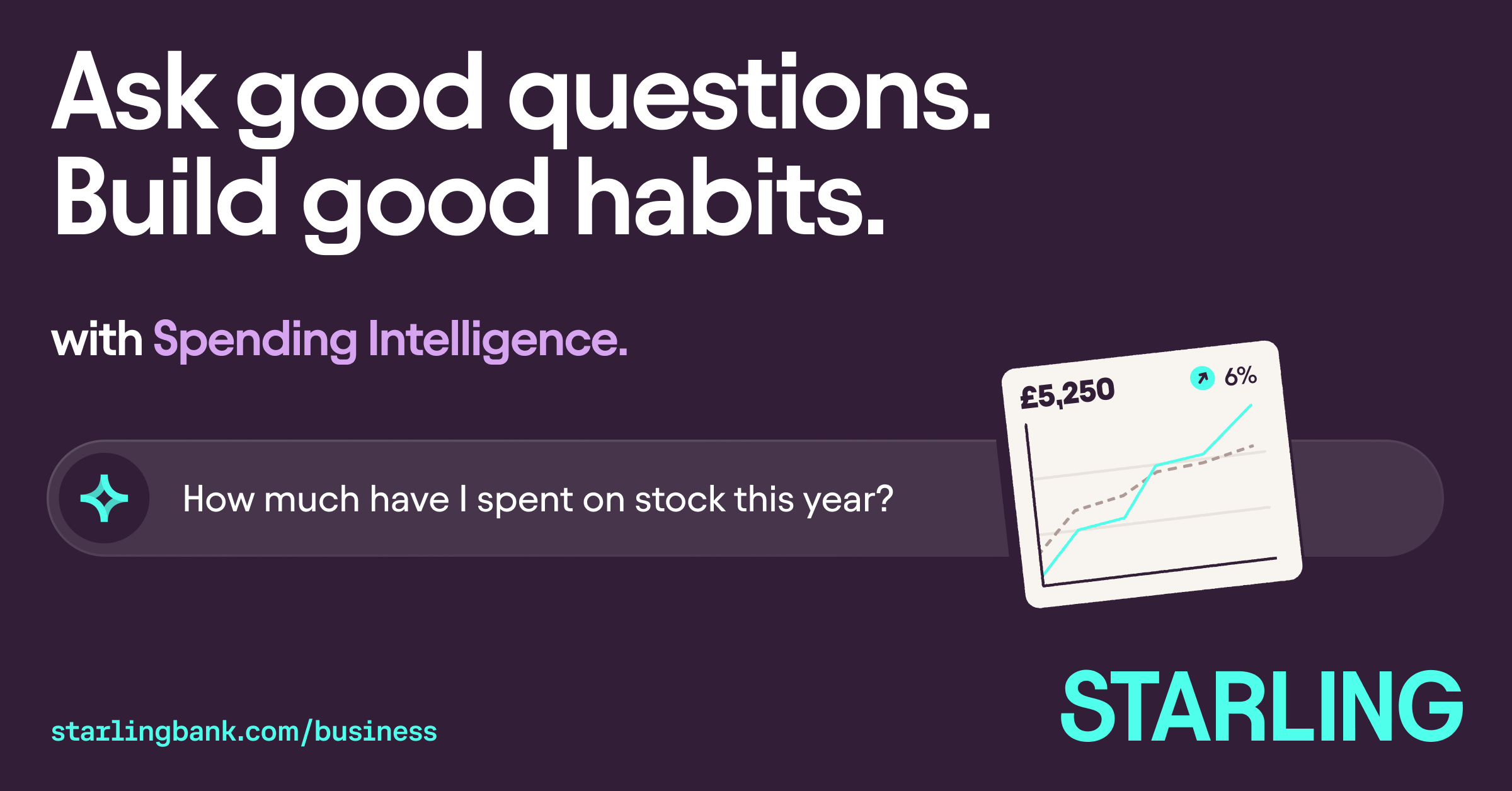
Starling's Business Spending Insights is where your transaction history becomes genuinely useful. Starling automatically assigns spending categories to your business transactions — think 'Marketing', 'Equipment', 'Staff' — so instead of scrolling through raw payments trying to remember what each one was, you get a clear breakdown of where your money went.
You can toggle between a category view and a merchant view, compare your outgoings month to month, and use the AI-powered search bar to ask questions about your spending habits directly. You can also create custom tags to track project work to view total spend.
You can also attach photo receipts and written notes to individual transactions — useful for expense logging and tax time. It turns your account into a real financial management tool, not just a list of debits.
Profit (what's left)
Profit is the money left in your business after costs have been taken away from your revenue. It helps you understand whether your business is financially sustainable — but there are different types of profit, and each one tells you something useful.
Gross profit is your revenue minus the direct cost of delivering your product or service, such as stock, materials, packaging or delivery costs. It helps you see whether your pricing is working.
Operating profit is what’s left after your everyday running costs are taken away, such as rent, software, marketing, insurance or admin. It shows whether the business is working day to day.
Net profit is the final figure after all costs, tax, interest and other expenses have been accounted for. This is often the number people mean when they ask how profitable a business is.
For small business owners, the most important thing is understanding what the numbers are telling you: are you keeping enough money to cover your costs, pay yourself and keep the business moving forward?
Cash flow
Cash flow is the timing of money moving in and out of your business. You can be profitable on paper and still run out of cash; for example, if a client owes you £5,000 but has not paid yet and your rent is due this week. Understanding your cash flow means you can anticipate gaps before they become crises.
Starling Spotlight: Spaces
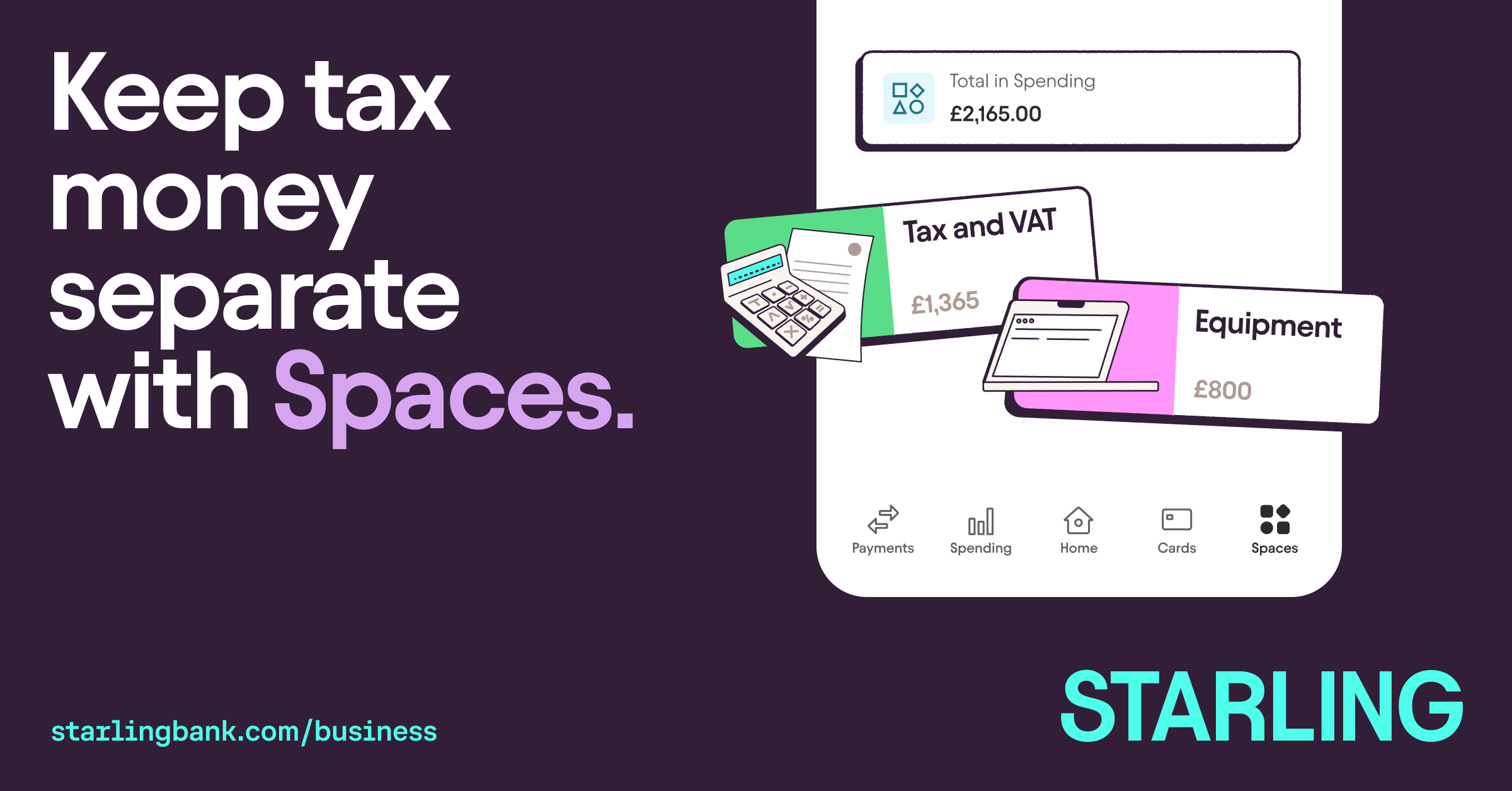
Starling's Spaces are virtual pockets of money within your account, kept separate from your main balance. Think of them as digital change jars. You can set aside money for taxes and VAT, payroll, rent, office equipment, or anything else you're saving towards, and it sits cleanly apart from your day-to-day spending. There's no need to open a separate account or track it in a spreadsheet: it's all in one app, allocated and visible. It's a simple, practical way to act on your cash flow awareness, and funds in Spaces are FSCS protected up to £120,000.
How to get your business finances ready for budgeting
Before you build a budget, you need a clear view of what is already happening in your business. Start by looking at the money coming in, the money going out, and the costs that keep showing up every month.
For example, you could:
List your regular monthly costs: This might include software subscriptions, insurance, rent, website hosting, accounting fees, coworking memberships or freelance support.
Separate fixed and flexible costs: Fixed costs stay roughly the same each month, like insurance or software. Flexible costs change depending on what you are doing, like marketing spend, stock, materials, travel or event costs.
Create simple money Spaces: You might have separate Spaces for tax, VAT, bills, savings, marketing, professional development or quieter months. This helps you see what money is actually available to spend.
Review your last three months of transactions: Look for patterns. Are there subscriptions you forgot about? Are you spending more on delivery, materials or software than expected? Are there months where income regularly dips?
Set a basic payday rule for yourself: Even if you cannot pay yourself the same amount every month yet, decide how and when you will review what the business can afford. This helps owner pay become part of the plan, not an afterthought.
Budgeting becomes much less intimidating when your finances are already organised. Instead of guessing what you can afford, you can make decisions based on real numbers.
Putting it into practice: your first business budget
You do not need a complicated system to start. Here is a simple way to build your first business budget:
List your expected monthly income. What do you expect to bring in? Be realistic and use your last three months as a guide.
List your fixed costs. What goes out every month no matter what? Add these up.
Estimate your variable costs. What do you typically spend on top of that? Give yourself a realistic monthly figure.
Subtract your total costs from your expected income. What's left? That is your projected profit and your starting point for making better decisions.
Review it at the end of each month. Compare what you planned against what actually happened. Over time you will get better at forecasting, and more confident every time you open your accounts.
What budgeting has meant for the City Girl Network
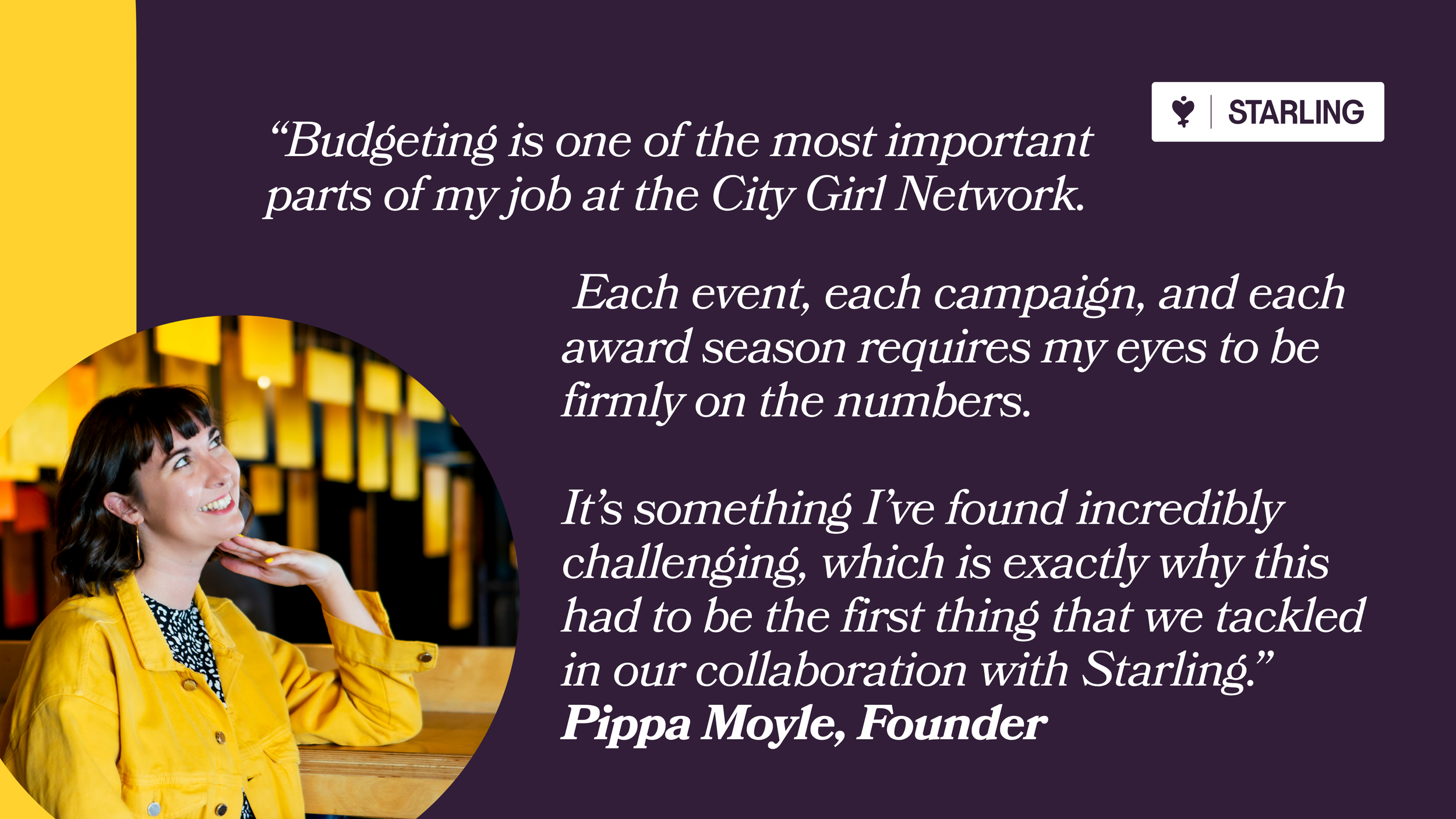
Budgeting is one of the most important parts of my job at the City Girl Network. Each event, each campaign, and each award season requires my eyes to be firmly on the numbers. It’s something I’ve found incredibly challenging, which is exactly why this had to be the first thing that we tackled in our collaboration with Starling.
If I could go back to my 2017 self, having just incorporated the City Girl Network as a Limited Company, learning how to build a budget would have been the first thing I did. Instead, I struggled through with avoidable cash flow problems and money worries, because I didn’t put the time into developing this core skill.
Personally, I use a spreadsheet to map out the budget and then activate it in real time through Spaces and Bills Manager in my Starling Business Account.
Budgeting isn’t a superpower, nor is it a qualification to be a finance expert. It’s the vital tool that every business needs to truly grow and help them be good with money.
Ready to get your business finances sorted?
A Starling Business Account is free to open, with no monthly fees. You get real-time visibility of every transaction, automatic spending categorisation, Spending Insights, and Spaces to set money aside as virtual pockets for taxes, upcoming costs, or savings goals — all within the same app. No faff. Just clarity.
Disclaimer: This article contains general information only and is not intended to address your particular circumstances or requirements. This information does not constitute advice in any way and should not be taken as such. If you have questions about your specific circumstances or require financial advice, please speak to an independent financial advisor.