

‘Don’t Forget Us Here’: Art from Guantanamo Bay
*sensitive content warning: mentions of assault, violence, torture
Jubilee Library is currently holding an art exhibition in collaboration with the UK Guantanamo Network and Amnesty International UK. The exhibition features works by former* Guantanamo Bay detainees, and it is open to the public until 3rd April 2026.
The exhibition aims to raise awareness on the injustice of indefinite detention with no trial, and calls for the long-awaited closure of the Guantanamo Bay detention camp.
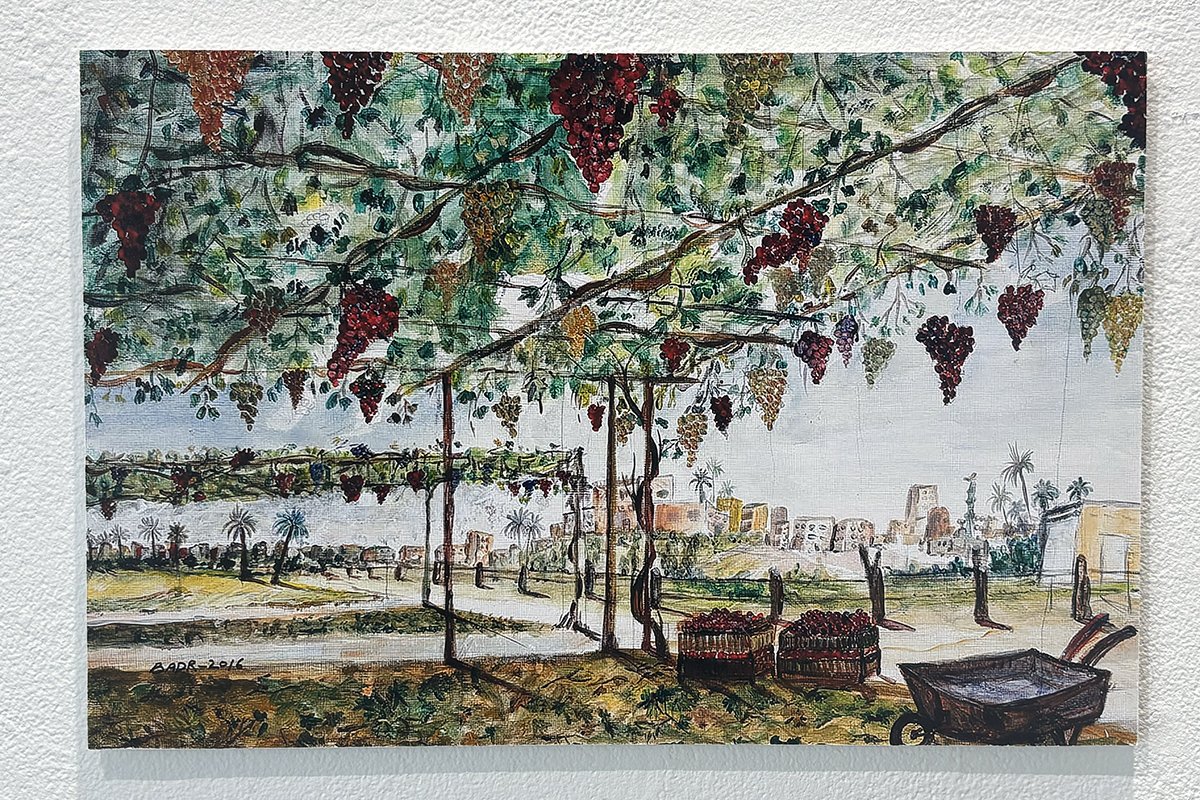
Ahmed Rabbani, Untitled (Grape Arbor), 2016, Acrylic on paper
Guantanamo Bay opened in 2002 as part of George Bush’s ‘war on terror’, on the pretense of holding ‘illegal combatants’ and obtaining counter-terrorism intelligence. Here, the CIA implemented ‘enhanced interrogation techniques’ on the detainees. These techniques involved waterboarding, sexual and physical assault, religious degradation, force feeding, stress positions, beatings. The detainees at Guantanamo bay were often imprisoned with no charge, were denied legal counsel, and never went to trial. Instead, they were tortured, punished, sometimes killed, in open defiance of the Geneva Convention and a shameful violation of human rights.
The “Don’t Forget Us Here” exhibition features several works by former detainees, shedding a light on their experience and lives post-release.
This isn’t the first time that art managed to escape the walls of Guantanamo prison. In 2023, the Seton Hall University School of Law published a series of drawings by Abu Zubaydah, the first ‘official’ victim of the CIA’s torturous interrogations. Zubaydah’s 40 drawings make up the most extensive and detailed account of the treatment he and hundreds of other men endured at Guantanamo. It is a harrowing and necessary condemnation of the American Torture Program, whose gruesome details the CIA tried for years to keep secret.
While Zubaydah’s drawings recounted his past and gave him a chance to call out his torturers, “Don’t Forget Us Here” offers a different perspective. It’s an outlook into the future, a visual account of the humanity and beauty that survived the pits of Guantanamo. Through their work, these artists reclaim their voice, they refuse to be silenced. An incredible act of courage, after the inhumane attempts their jailers have made to nullify them, to pulverise their spirit and courage.
“Don’t Forget Us Here” is bold, colourful, and naturalistic. It is a deeply human vision of the world, but that surprisingly includes no people. Instead, it focuses outwards: a forest, a sunset, a food market with ripe fruit on display.
My favourite piece in the exhibition is Ahmed Rabbani’s ‘Untitled (Grape Arbor)’, 2016. It transported me back to my childhood, to playing in my grandparents’ vineyard, picking fresh grapes whose juice tasted sweet and fresh. I saw the world through Rabbani’s eyes and he saw it through mine. That is why “Don’t Forget Us Here” is important, and demands our attention. It reminds us that what happened at Guantanamo isn’t far removed, isn’t in the past. It’s in the eyes and lives of the men that survived, and those who didn’t.
Guantanamo Bay prison is often discussed as the by-product of a racialised, colonial, unlawful system that put the US regime’s political interests before the lives of innocent men. A system that benefits from silence, from ignorance, from inaction. In spite of several calls for its closure, Guantanamo Bay continues to operate and currently holds 15 detainees. The UK Guantanamo Network works relentlessly to ensure fair trials or safe releases for these men. ‘Don’t Forget Us Here’ is a powerful reminder that Guantanamo Bay still stands, and a hopeful wish that the experience of its prisoners won’t be silenced any longer.
Find out how you can help at: https://ukguantanamonetwork.org/about
* one of the artists was approved for release in 2022 but he remains held without charge.
Written by Roberta Guarini