

Understanding VAT: What You Need to Know and When
VAT. Three little letters that sound official, complicated and easy to get wrong. On one hand, hitting the VAT threshold is seen as a huge achievement, but the reality of VAT bills famously can take its toll on businesses and their founders.
Here's the reassuring truth: you don't need to understand all of VAT. You only need to understand the parts that apply to you, and have a great accountant and bank (such as Starling) to support you when the time comes.
In this guide, we'll cover what VAT actually is, the point at which you have to care, the schemes on offer, and exactly how to get ready.
Does VAT even apply to you?
Let's answer the most important question first, because for a lot of you it takes the pressure off entirely: below the threshold of £90,000 a year, most small businesses and sole traders aren't charging VAT at all. If that's you, you can breathe, but keep half an eye on it as you grow, because that can change.
There's one thing we really want sole traders to hear, though: VAT and Income Tax are not the same thing. Even if you're nowhere near VAT registration, you still owe Income Tax on your profits through Self Assessment. So making a habit of setting aside a slice of your earnings - after accounting for business expenses - will keep you one step ahead.
What VAT actually is (in plain English)
VAT (Value Added Tax) is a tax added to most goods and services in the UK, at a standard rate of 20%. When you're VAT-registered, you add VAT to what you charge your customers, collect it, and pass it on to HMRC. In most circumstances, you can reclaim the VAT you've paid on your own business purchases.
The mindset shift that saves people the most pain is this: the VAT you charge was never your money. You're collecting it on HMRC's behalf and holding it until it's due. Treating it as income and spending it is the single most common VAT mistake there is.
When VAT applies: the threshold
You must register for VAT once your taxable turnover goes over £90,000 in any rolling 12-month period. Not a calendar year or a tax year, but any twelve months in a row. You also have to register if you expect to cross £90,000 in the next 30 days alone. There are other situations in which you may be required to register.
"Taxable turnover" is the total of your UK sales that aren’t VAT-exempt or outside the scope of UK VAT. Crucially, this includes zero-rated (0%) sales; many assume that charging 0% VAT means it doesn't count, but it does. If you're approaching the line, that's your signal to get ready (more on that below).
You can also choose to register voluntarily below the threshold. Sometimes that makes sense. You can reclaim VAT on your purchases, and being VAT-registered can make a young business look more established. But it also means more admin and charging your clients more, so weigh it up and speak to an accountant first, rather than doing it by default.
The VAT schemes, briefly
Once you're registered, there's more than one way to do it, and the right one depends on how your business operates:
Standard VAT accounting: charge VAT on your sales, reclaim it on your purchases, and pay HMRC the difference each quarter. This is the default. One key watchout - this is based on invoice dates, meaning you owe VAT on an invoice you send, even if your client hasn’t paid you yet.
Flat Rate Scheme: pay HMRC a fixed percentage of your gross turnover and keep the difference, in exchange for simpler admin. This could suit service businesses with few costs. Bear in mind you generally cannot reclaim VAT on everyday purchases - though you can still claim on single capital assets costing over £2,000.
Cash Accounting Scheme: account for VAT only when money actually changes hands, rather than when invoices are issued. While this protects your cash flow from late-paying clients, remember it works both ways: you also can’t reclaim VAT on supplier bills until you’ve physically paid them.
There's no universally "best" scheme. It depends on your costs, your margins and how you're paid. This is exactly the kind of question worth putting to an accountant. You can also see the other schemes available on the gov.uk website.
What catches businesses out
Spending the VAT they've collected, because it was sitting in the main account looking like money. It isn't yours.
Not noticing turnover creep until they've sailed past £90,000. Registration is backdated to when you should have registered, so a missed threshold can mean an unexpected bill.
Missing quarterly return deadlines and picking up avoidable penalties.
Making Tax Digital (MTD). VAT-registered businesses must keep digital records and file through MTD-compatible software. Paper and manual spreadsheets alone no longer meet the requirements. MTD is also continuing to extend to Income Tax for more sole traders and landlords, so getting a tidy digital system in place now pays off either way.
How to get ready
Watch your rolling 12-month turnover so the threshold never surprises you.
Set aside the VAT slice the moment you're paid, kept apart from spendable money.
Keep clean, digital records from day one.
Get MTD-compatible accounting software in place before you register.
Talk to an accountant before you cross the threshold.
Starling: Calculate and Pay VAT
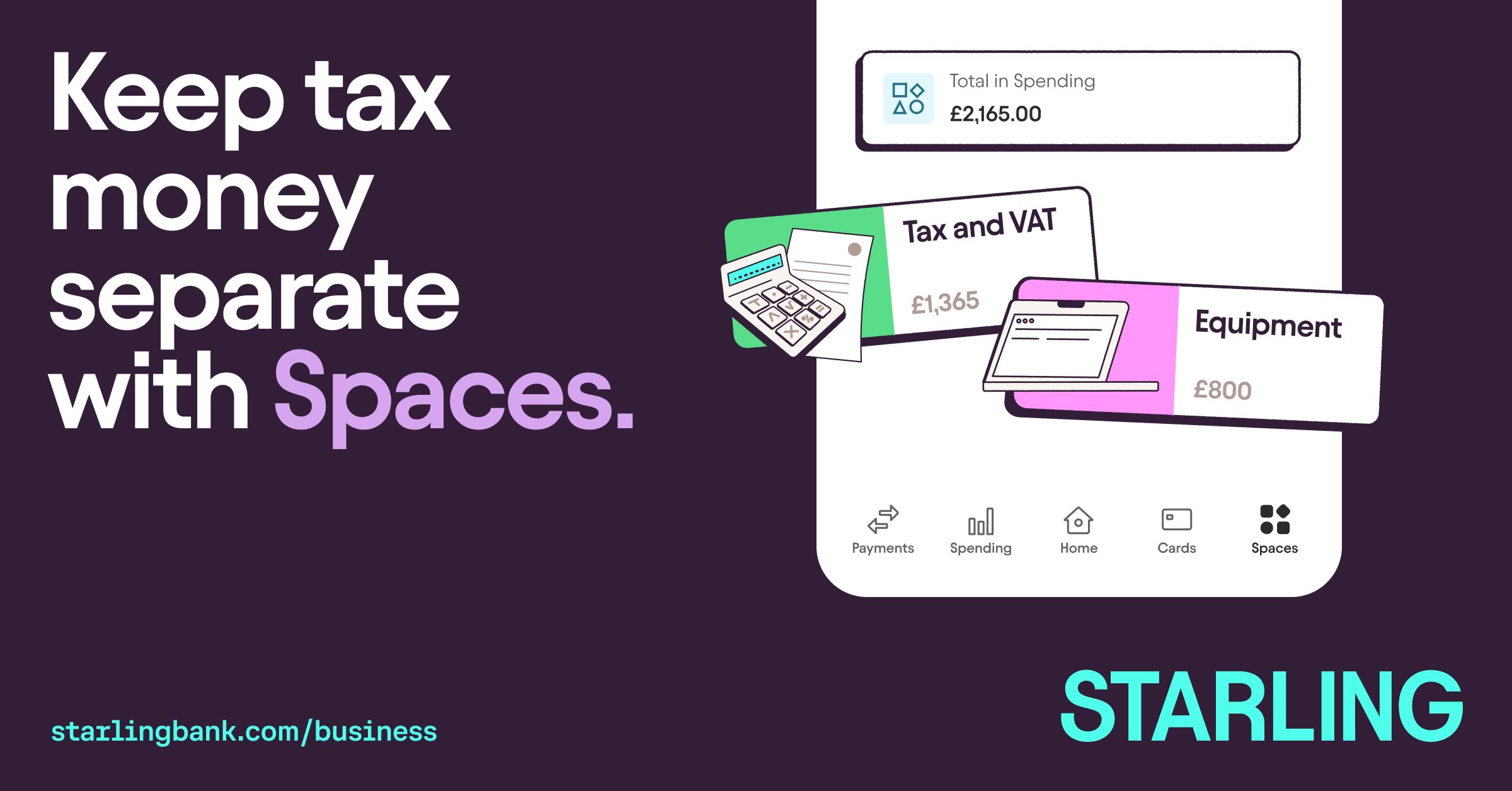
Starling takes a lot of the fear out of VAT by handling the fiddly parts for you. It can calculate the VAT you owe as you go, and you can ring-fence that money in a dedicated Space the instant a payment lands, so it's never accidentally spent. Clean transaction records and simple exports make completing your return far less painful. Starling has its own HMRC-recognised accounting tools for Making Tax Digital, and their Business Marketplace can also connect you to other MTD-compatible accounting software that works alongside your account. VAT stops being a quarterly scramble and becomes something quietly under control.
See: starlingbank.com/features/calculate-and-pay-vat
Putting it into practice: your VAT-readiness checklist
Check your turnover. Where does your rolling 12-month total sit against £90,000?
Decide, with an accountant, whether and when to register, as well as which scheme fits your business.
Start ring-fencing tax now.
Get MTD-ready. Compatible software in place and digital records kept from the start.
Diarise the dates. Your registration point, and your return or Self Assessment deadlines.
Already approved asset to be added into the article:
Ready to take the fear out of VAT?
A Starling Business Account is free to open, with no monthly fees. Right out of the box, you can get real-time transaction visibility to help track every invoice and bill as it happens, and use Spaces to set aside tax and VAT, so you’re never caught short.
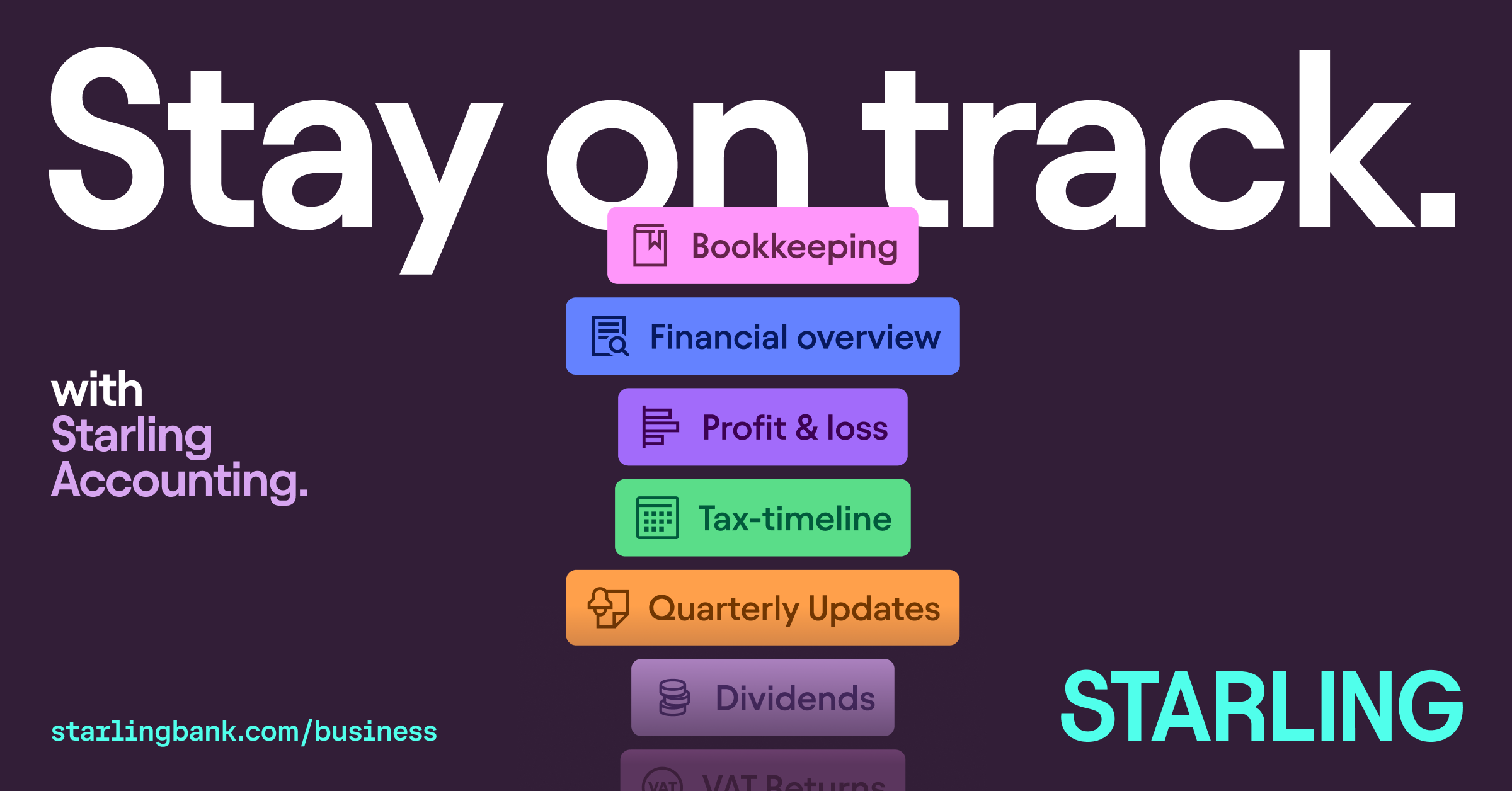
*Note: while Starling Accounting can streamline your quarterly VAT returns and keep your records audit-ready, it doesn’t currently handle end-of-year tax declarations, so you’ll still want an accountant or tax software for year-end filing.
Disclaimer: This article contains general information only and is not intended to address your particular circumstances or requirements. It is not tax or financial advice and should not be taken as such. VAT rules, rates and thresholds change — the £90,000 threshold is correct at the time of writing, but always check the current position on GOV.UK and speak to a qualified accountant or independent financial advisor about your specific circumstances.
Neither Starling Bank nor any of Starling's products or services provide VAT, tax or financial advice, and nothing in this article should be taken as such. Starling's tools can help you record, calculate and set aside VAT, but they are not a substitute for professional advice