

How to Create a Business Budget That Actually Works for Small Businesses
Most of us have made a budget at some point. You know the one: built in a burst of New Year energy, colour-coded, neat, full of good intentions… and quietly abandoned by March. If that sounds familiar, you are in very good company.
In our previous guide, we explored why budgeting matters and how to understand the money moving through your business. Now, it’s time to turn those numbers into a budget you can actually use.
Here's the good news, and it's worth saying plainly: you are not bad with money. The problem is almost always the budget itself.
Most budgeting templates are built for someone on a predictable monthly salary, where the same amount lands on the same day every month. Your business doesn't work like that. Some months are brilliant, some are quiet, sometimes a client pays late; a template that assumes every month is identical won’t make it in the business world.
This guide is about building a different kind of budget. One based on what your business actually does, flexible enough to handle the good months and the lean ones, and realistic enough that you'll genuinely keep using it. No jargon, no finance degree required.

The biggest budget barriers in the Business Connections community
The release of our ‘Simple Guide to Business Budgeting’, and the Brighton launch of our Business Connections powered by Starling shone a light on two core barriers to building actionable and realistic budgets.
Starting from a blank page
Most templates hand you an empty grid and ask you to fill in what you think you'll earn and spend. Without a clear starting point, you rely on guess work; the numbers are a wish, not a plan. When the real numbers inevitably look different, the budget stops becoming useful.
Assuming every month looks the same
This is the big one for anyone with irregular income. A budget that expects a tidy, identical figure every month will break the first time you have a quiet spell or an invoice is paid late. Instead of helping, it just makes you feel behind.
We're going to do it differently. Rather than guessing forwards into a blank page, we'll build backwards from what your business has already done. Your own recent numbers are the most honest budgeting data you'll ever have.
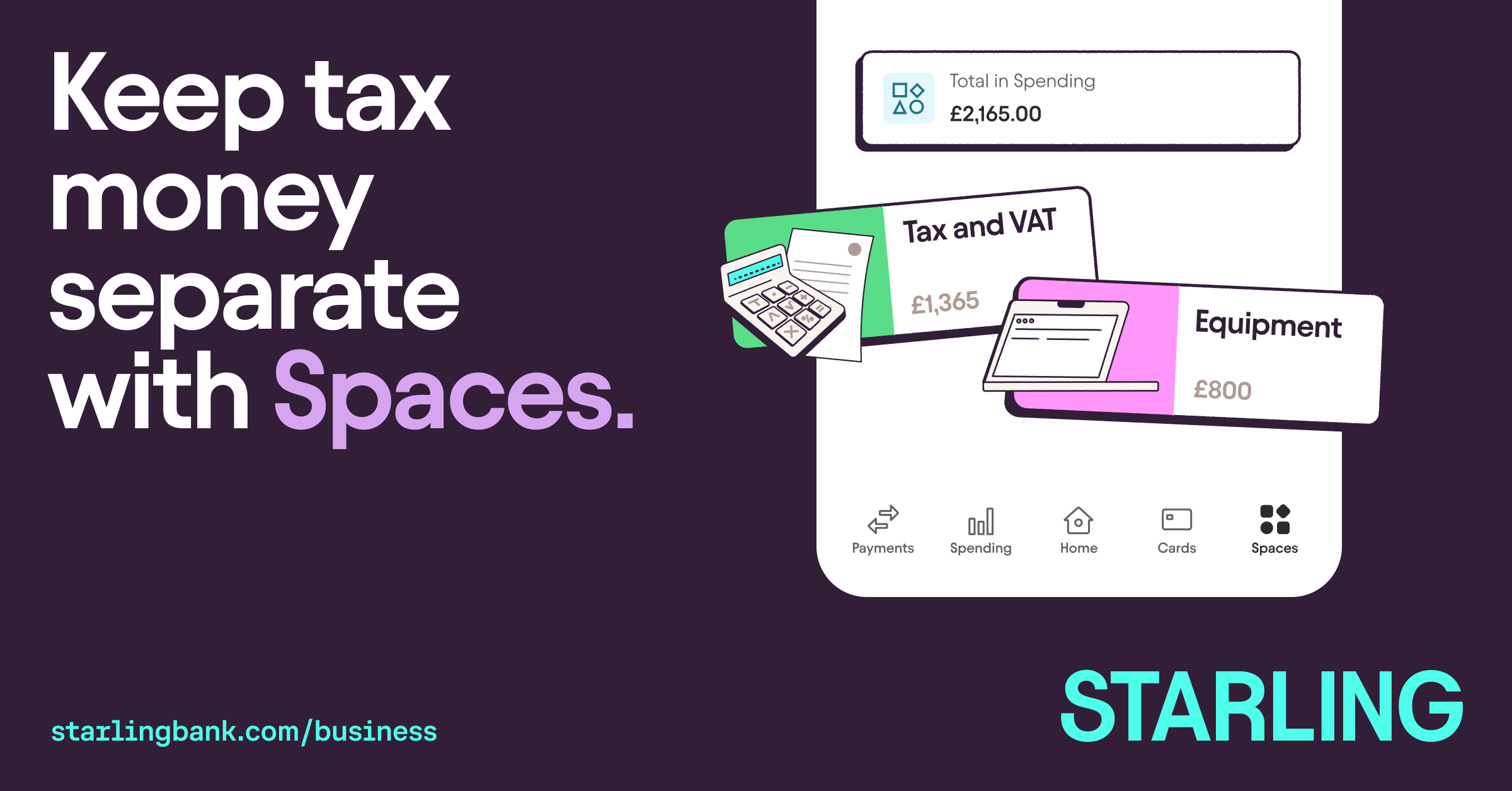
“Budgeting often gets a bad reputation as being restrictive and chore-like, but for a small business owner, it could be your greatest tool for growth - it provides the clarity to say ‘yes’ to new opportunities with confidence. To make this practical, we built ‘Spaces’ as a way to ring-fence money for your bills, VAT, or individual projects instantly. By separating these funds from your daily working balance, you’re not just tracking numbers; you’re creating a realistic, visual plan of your finances - so running your business doesn’t get in the way of loving your business. ”
Start with what already happened
Before you plan a single future month, look at at least three months (12 would be even better) of real transactions. Not what you hoped you earned and spent, but what you actually did.
Imagine Clara, a freelance designer. One month she invoices £4,200 and feels unstoppable. The next it's £1,900 and she's quietly panicking. Same business, same Clara, but two very different months. When she stops guessing and looks back at her last three, a real pattern appears: her income lives somewhere between roughly £1,900 and £4,200, with steady software, website and accountancy costs underneath it. That's something no blank template could ever have told her.
The easiest way to do this is to have your spending already sorted for you.
Starling: Spending Insights & Categories
This is where your transaction history earns its keep. Starling automatically sorts your business transactions into categories, such as 'Marketing', 'Equipment', 'Software and Subscriptions', ‘Revenue’ and ‘Travel’. Instead of scrolling through a list of payments trying to remember what each one was, you see exactly where your money went at a glance.
It turns three months of raw payments into a clear, usable starting point for your budget in minutes.
The budgeting rules businesses keep coming back to
The real tip to building a budget that works for you is embracing the fact that numbers change and planning for the unsteady nature of cashflow.
Work with a range, not one magic number
Look back at those three months and you won't find one tidy figure, you'll find a range. That range is far more useful than a single made-up average, because it tells you the truth about how your business actually behaves.
Build to your lean month
This is the single most important habit for irregular income: build your budget around your quietest month, not your best one. That said, it’s important to recognise income patterns. Craft businesses, for example, typically have higher incomes in November and December, with those stronger months allowing them to cover extra stock, future investments or quieter periods in the year.
Back to Clara; she builds her must-pay costs, such as software, website, tax set-aside and her own basic pay, around her £1,900 month, not her £4,200 one. In a good month, the extra is a bonus: money to save, reinvest, or pay herself a little more.
Budgeting to your lean month is what lets you sleep at night. The good months take care of themselves.
The money that isn't really yours
One reason budgets go wrong is that we consider every penny to be ours the moment it lands, when some of it was never really ours to spend.
Set aside tax as you earn. Every time money comes in, a slice of it belongs to the taxman. Moving it out of your main balance straight away means no nasty surprises come January and July. With Starling you can put the money set aside for taxes into Spaces.
Keep half an eye on VAT. If you're approaching the VAT registration threshold, it changes how you price and plan. We're covering VAT properly next month, so for now just know it's on the horizon and worth watching.
Pay yourself on purpose. Your own pay should be a line in the budget, not whatever happens to be left at the end of the month. Even if the amount varies, decide how much and when you pay yourself. You are not an optional expense.
Get ready for Making Tax Digital. Eligible businesses need to use compatible software to keep digital records and submit information to HMRC. It already applies to VAT-registered businesses and is being introduced for some sole traders and landlords paying Income Tax. Setting up a tidy digital bookkeeping system now will make it easier to meet those requirements. Something else Starling can help you with.
If any of this raises questions about your particular situation, a good accountant is worth their weight in gold. Find yours in our directory.
Putting it into practice: your flexible first budget
You don't need special software to start.
Here's the whole thing in five steps:
Write down your income as a range. Use your last three months (12 would be even better). Your lean-month figure is your planning number.
List your fixed costs. The things that go out every month no matter what.
Estimate your variable costs. A realistic figure for the things that change price or you purchase only when you’ve confirmed a job.
Add your non-negotiables. Your tax set-aside and your own pay.
Prepare for your lean months. If your lowest-income month will not cover your essentials, calculate the shortfall and set that amount aside during stronger months. A quiet month is not necessarily a problem; consistently spending more than you earn may mean you need to reduce costs or review your pricing.
Set aside fifteen minutes at the end of each month to compare what you planned against what actually happened. With real-time visibility of your account, you'll spot a quiet patch or a creeping cost while you can still do something about it.
A budget is a living estimate, not an exam. When the real numbers are different to your plan, it gives you the crucial data you need to truly understand, sustain and grow your business.
Ready to build a budget that fits?
A Starling Business Account is free to open, with no monthly fees. You get real-time visibility of every transaction, automatic categorisation, Spending Insights, and Spaces to set money aside for tax and quieter months all in one app. It won't build your budget for you, but it does the hard, tedious part, so you can get on with running your business.
Disclaimer: This article contains general information only and is not intended to address your particular circumstances or requirements. This information does not constitute advice in any way and should not be taken as such. If you have questions about your specific circumstances or require financial advice, please speak to an independent financial advisor.