

London's Gallery Scene and Its Invisible Infrastructure
Most people walk into a London gallery, look at the art, and leave. Nobody stops to think about the display case keeping a 16th-century miniature safe, or the UV-filtering glazing that's stopping sunlight from wrecking a Turner watercolour.
But every exhibition in this city, whether it's in the Tate Modern's massive Turbine Hall or a converted railway arch down in Peckham, relies on physical infrastructure that most visitors will never give a second thought to. That infrastructure has been quietly changing over the past twenty years or so, and if you pay attention to it, you'll start to understand how galleries actually run when the doors are closed.
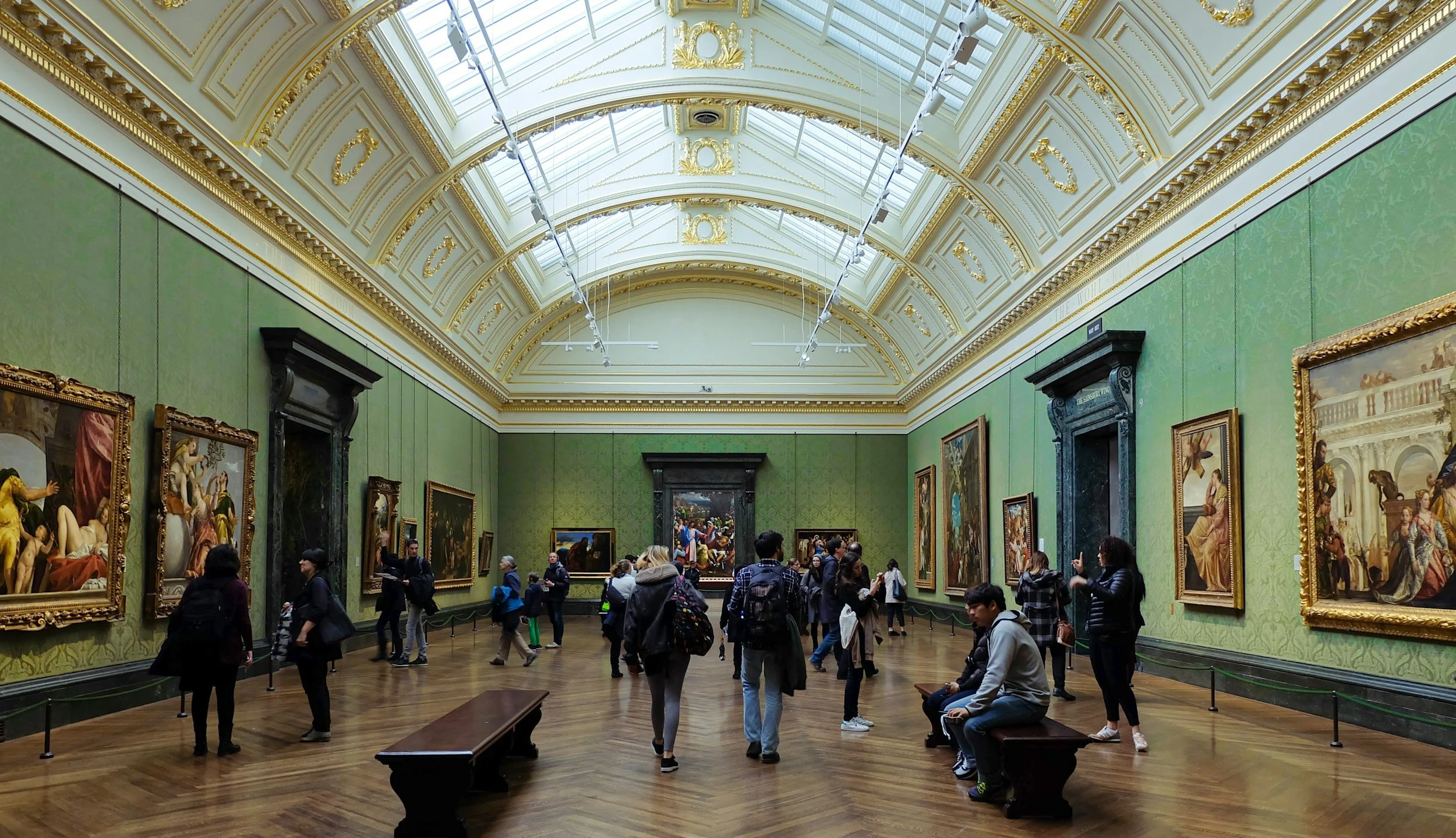
Photography by Vanessa Zhu
What Holds an Exhibition Together
If you walked through the Hayward Gallery during install week, you'd barely recognise the place. Technicians on scissor lifts are bolting aluminium track to concrete walls while electricians re-route cable runs for new lighting positions. Somewhere in a climate-controlled holding room, conservators are unpacking crated works and checking humidity readings before anything goes near a wall.
All of it exists to protect the work. Temperature and humidity need to stay within tight tolerances, typically around 20°C and 50% relative humidity for most paintings. Lighting gets measured in lux, and a lot of works on paper can't take more than 50 lux without risking long-term fading. If any of that goes wrong, the loan agreement collapses, the insurer pulls cover, and the show won't open. It's that simple.
How Smaller Galleries Keep Up
You'd think this kind of attention only applies to big national institutions, but smaller commercial galleries across London are dealing with the same pressures every day. A Mayfair gallery showing a loaned piece from a private collection will still need to hit the lender's environmental conditions. A project space in Bermondsey hosting a fragile mixed-media installation will still need proper hanging systems, stable temperatures, decent ventilation, and the right glazing.
What separates them from the big players is money. Smaller spaces can't afford bespoke climate systems, so they'll lean on portable humidifiers, blackout blinds, careful scheduling of natural light, and smart material choices to get as close to institutional standards as they can. That's actually one of the main reasons why the move away from traditional glass in framing and display cases has mattered so much, because it's given galleries at every scale a more workable option.
Why Galleries Moved Away from Glass
Glass used to be the default for display cases, vitrines, picture frames, and protective glazing. It had good optical clarity and everyone was used to it. But it also came with problems that curators and installers have been dealing with for years.
For a start, glass is heavy. A single vitrine panel in tempered glass can weigh two or three times as much as an equivalent acrylic panel. That adds up during transport, where every extra kilo pushes shipping costs higher, and during installation, where heavier panels need more people and more time to handle safely. Then there's insurance. Breakage during install is a genuine risk, and a shattered display case sitting next to a valuable object is the kind of scenario that keeps registrars up at night.
Cast acrylic, which most people know by the brand name Perspex, has become the go-to alternative in a lot of gallery settings. It weighs roughly half as much as glass at the same thickness, it won't shatter into dangerous shards, and it can transmit up to 92% of visible light. Many galleries now use clear Perspex sheets for display glazing because the optical quality is on par with glass, but without the handling headaches and safety concerns.

Photography by Gilber Franco
Lighting Rigs and the Details You Don't See
Glazing and cases are only part of it. Lighting is another area where galleries pour in money and effort without most visitors ever clocking it. Modern LED track systems have largely taken over from older halogen setups, and they've brought real benefits. LEDs throw off far less heat, which matters when you're lighting a work behind glazing and don't want to turn the inside of the case into a greenhouse. They're also tuneable, so a technician can tweak the colour temperature to suit different media.
Hanging systems have come a long way too. Most major galleries now use modular track-and-hook systems that let works get repositioned without drilling new fixings into the walls. It sounds like a small thing, but when you're turning around four or five exhibitions a year, it saves real time and cuts down on damage to the building itself.
What Visitors Will Never Notice
The best gallery infrastructure is the kind that stays invisible. When a visitor stands in front of a painting and the colours look right, there's barely any reflection, and the frame sits cleanly on the wall, that's the result of dozens of behind-the-scenes decisions about materials, hardware, lighting, and environmental controls.
London's gallery scene keeps growing. New spaces open every year and existing institutions are planning ambitious expansions. The art will always get the attention, and that's how it should be. But next time you're standing in front of a vitrine at the V&A or peering at a photograph in a Peckham pop-up, spare a thought for the invisible infrastructure that got it there in one piece.
This is a sponsored post.