

Most small business owners don't set their prices. They borrow them: from a competitor, from a gut feeling, or from whatever felt least awkward to say out loud. Here's how to find the price your business needs, and say it without flinching.
We've all done the quote-and-flinch. You type out a price, stare at it, and knock a bit off before you've even pressed send. Then the job takes twice as long as you planned, your costs creep up, and you end up earning less per hour on the work you love than you did in your first Saturday job.
Here's the reassuring part. Undercharging doesn’t need to be a confidence problem. It's a knowledge problem. Once you know what your work really costs to deliver, the right price stops being a guess and becomes something you can stand behind. The confidence follows.

Where pricing goes wrong in the Business Connections community
Since Business Connections launched, the same three pricing traps have come up again and again in conversations with members.
Pricing by peering over the fence
Checking what others charge feels sensible, and it's a useful sense-check at the end. As a starting point, it's a gamble. You don't know their costs, their hours, or whether they're quietly working for nothing. Copy their price and you might be copying their problem.
Counting the making, not the doing
Most of us price the bit of the job we picture: the haircut, the logo, the cake. But every job also comes with emails, quotes, sourcing, travel, set-up, tidying and invoicing. None of it feels like "work", all of it takes time, and if it isn't in the price, you're paying for it yourself.
The mates' rates trap
Your existing client wants to “budget” a website. Your sister's colleague wants a bouquet. You knock a chunk off because it feels nice, and it would be weird not to. But it rarely ends well.
Favours have a habit of growing. Because the relationship matters, it's harder to say no to "one more small change", harder to chase a late payment, and harder to draw a line when the brief drifts. The job you discounted often ends up being more work than a full-price one, not less. Charge properly, scope it in writing and, if you want to be generous, show the discount clearly on the invoice so everyone knows what the work is really worth.

Brighton Business Connections Panel: July 2026
Photography by Sophie Sheinwald
Break the job down, all of it
The fix for all three traps starts in the same place. Stop pricing a job as one lump, and list every single thing it involves: the time each step takes and every material or tool it uses. Nothing gets left off because it feels too small.
Take Maya, a florist who charges £180 for a bridal bouquet, because that's roughly what everyone else seems to charge. In her head, a bouquet is an hour and a half of arranging. When she lists everything else (the consultation, the early market run, conditioning the stems, wrapping, delivery, the back-and-forth emails), it's closer to an afternoon. Arranging is only a third of the job.
Know what your time is worth
Next, work out what an hour of your time has to earn. Start with the salary you want to pay yourself, then add what it costs to run the business: insurance, software, your website, your studio or desk.
Then be honest about how many days you can actually charge for. Holidays, bank holidays and sick days come off first. So do the days spent learning, networking, doing your accounts and marketing your own business. For most of us, that's a day a week or more that no client pays for. Spread your salary and costs across the days that are left, and your real day rate is usually far higher than the figure you had in your head. For Maya, it was nearly double.
Getting your costs right with Starling. Your numbers are only as good as your records. Starling's Spending Insights sorts your business spending into categories automatically, so you can see what running your business costs at a glance instead of guessing. If you haven't built a budget yet, our guide to creating a business budget that actually works is the place to start.
Cost, then cushion, then profit
Once you know the full time a job takes and what your time is worth, add your materials and you have your true cost. That's your break-even point: it pays you and covers the business, and nothing more. When Maya did this, she found she'd been losing money on every bouquet.
Two more layers turn a cost into a proper price:
Contingency covers the things that will go wrong, just not always on the same job: a price rise from your supplier, an extra fitting, a delivery that runs late.
Margin is your profit: the money that lets a business grow, invest, get through a quiet month or take a proper holiday.
Only after that do you look at what others charge. If your price sits in the range, great. If it doesn't, you now know why, and you can explain every pound of it. If you're VAT-registered, VAT goes on top. VAT and how you pay yourself are exactly where a good accountant earns their fee, and you can find one in our Business Directory.
Selling your time, not things? Same rules
Meet Jess, a freelance marketing consultant who runs a café's social media for £650 a month, because that's what their last freelancer charged. When she listed everything the retainer involves, the planning, the posts, the revisions and the 15 minutes a day replying to comments she'd never counted, it came to more than two full working days a month. At her real day rate, the café was costing her money before she'd made a penny of profit.
For service businesses, scope creep is the biggest risk ("just one quick extra post"), so allow a bigger cushion than you would for a product. And if the right price feels like too big a jump for a client, change the package rather than the price: fewer posts, or comments handled three days a week instead of five. Either way, every hour you work gets paid for.
The money that isn't really yours
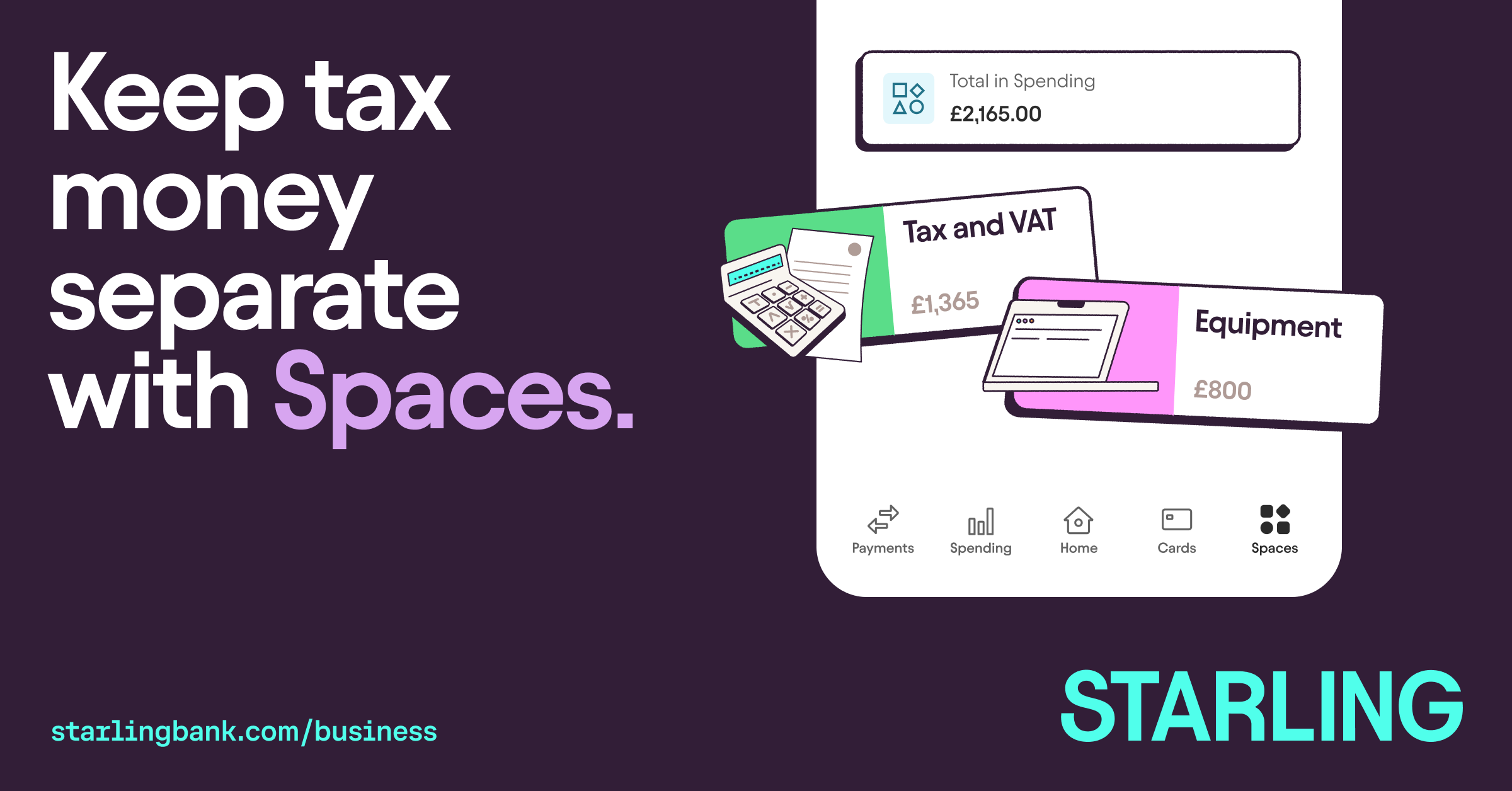
A proper price only helps if the money ends up where it should. Some of every payment belongs to the taxman, some to your cushion and some to your profit, and it all looks the same sitting in one account.
This is where Starling's Spaces come in. Set up separate Spaces for tax, contingency and profit, and move each slice across as the payment lands. Starling also have a range of 'smart tools' within the 'Assistant' in their app, one of which can help you put aside money for tax.
“A lot of founders fall into the trap of pricing the deliverable rather than the cost of delivering it. When you can see your real operating costs clearly, and set money aside the moment an invoice lands, you can quote with confidence, and keep your business thriving.”
Saying the number out loud
Lead with the price, then stop talking. No apology, no "I know it's a lot".
Put the scope in writing. What's included, how many revisions, what costs extra. It protects friendships as much as profit.
Raise prices on purpose. Review once a year, give existing clients notice, and don't wait until you're burnt out to do it.
Make discounts visible. If you choose to give one, show the full price and the discount, so it reads as a gift rather than your rate.
Ready to quote without flinching?
Next time you type out a price, you won't be guessing. You'll know what your work costs, what it needs to earn and why the number on the screen is the right one. That's what pricing with confidence looks like.
Selling a service? Start with your hourly rate. It's the building block for every quote you send.
A Starling Business Account is free to open, with no monthly fees.
This article contains general information only and is not financial or tax advice. For advice on your specific circumstances, speak to an independent financial adviser or accountant.